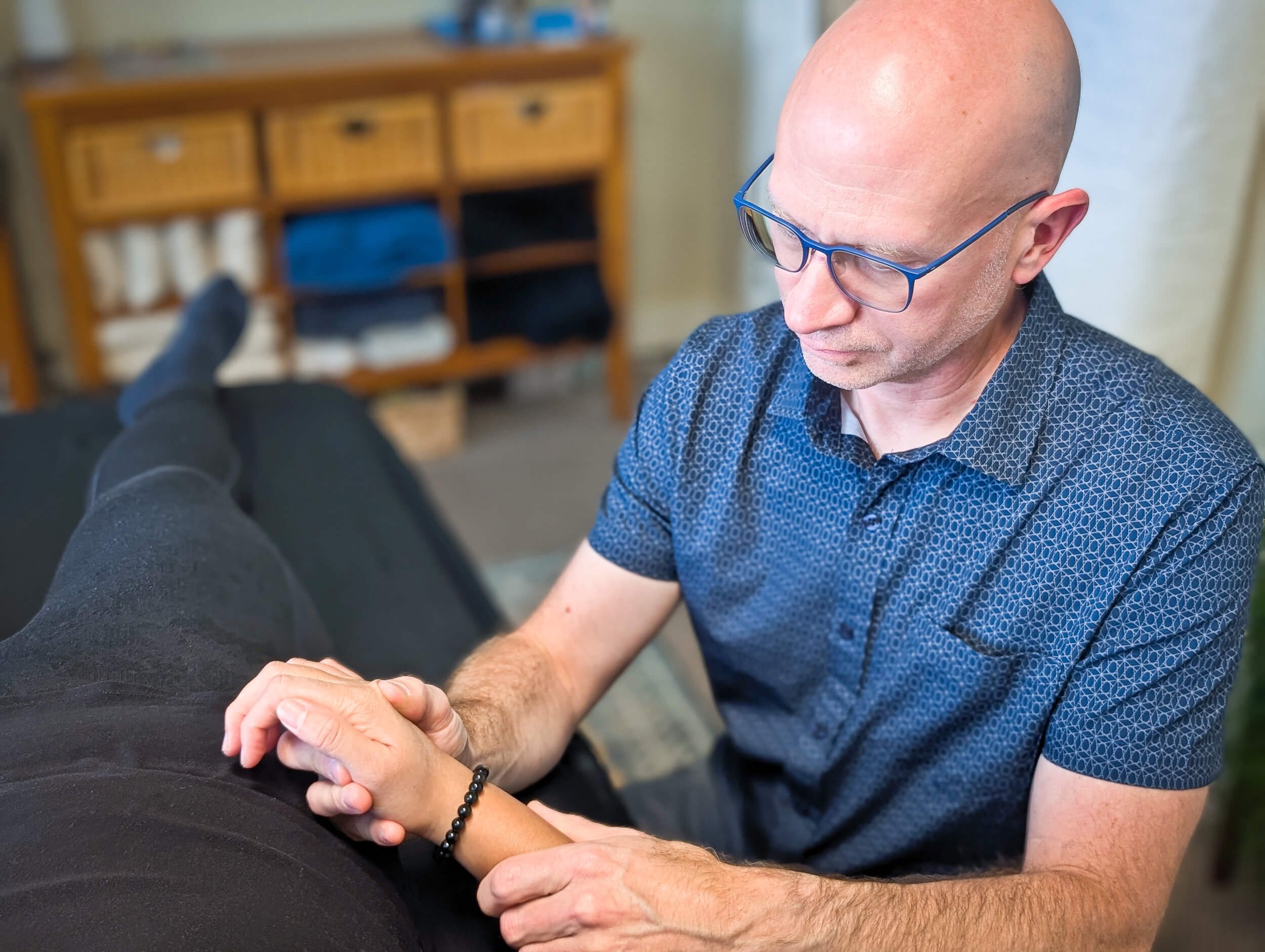
A Closer Look at Your Session
Every person's story is different. That is why your session never follows a predetermined routine or assumes that two people with similar discomfort need the exact same care.
Each visit begins with what you are experiencing. Through conversation, specialized assessment, and individualized hands-on work, the findings guide where the session starts and how it unfolds.
Beyond Traditional Massage
If you are used to traditional spa massage with lotions and standard muscle routines, this work feels quite different.
You stay fully clothed. Sessions take place in comfortable everyday clothing, making it easy to move and check posture as things shift.
The focus goes beyond muscles. I explore how skin, fascia, tendons, ligaments, joint capsules, nerves, blood vessels, and the tissues supporting your internal organs connect, glide, and interact. This broader perspective draws on specialized fascial and visceral approaches.
Gentle, sustained contact. Rather than forceful deep-tissue strokes, the work involves calm, attentive holds. Many people find sessions deeply relaxing as their nervous system settles.
Why the Spot That Hurts Isn't Always Where a Session Starts
Think of your body as one continuous, interconnected web of connective tissue. Healthy tissues are designed to move, slide, and adapt smoothly together every time you breathe, walk, bend, and twist.
When an old injury, surgery, illness, or period of stress creates a restriction in one area, it tugs on other areas. Picture testing your shoulder mobility by lifting one arm straight overhead with ease—then lowering it, grabbing your shirt near the front of your ribs on that same side with your opposite hand, and trying to lift again. Suddenly, your arm stops short—not because anything is wrong with your shoulder, but because the fabric is anchored from below.
Your internal tissues work much the same way. Restrictions along nerves, blood vessels, internal organs, or surrounding connective tissue can quietly tug elsewhere and limit how you move. While each person responds in their own way, my goal is to address what is driving that tension so your body has a better chance at lasting change—not just temporary relief.
How a Session Unfolds
01 · Assess and Identify the Primary Restriction
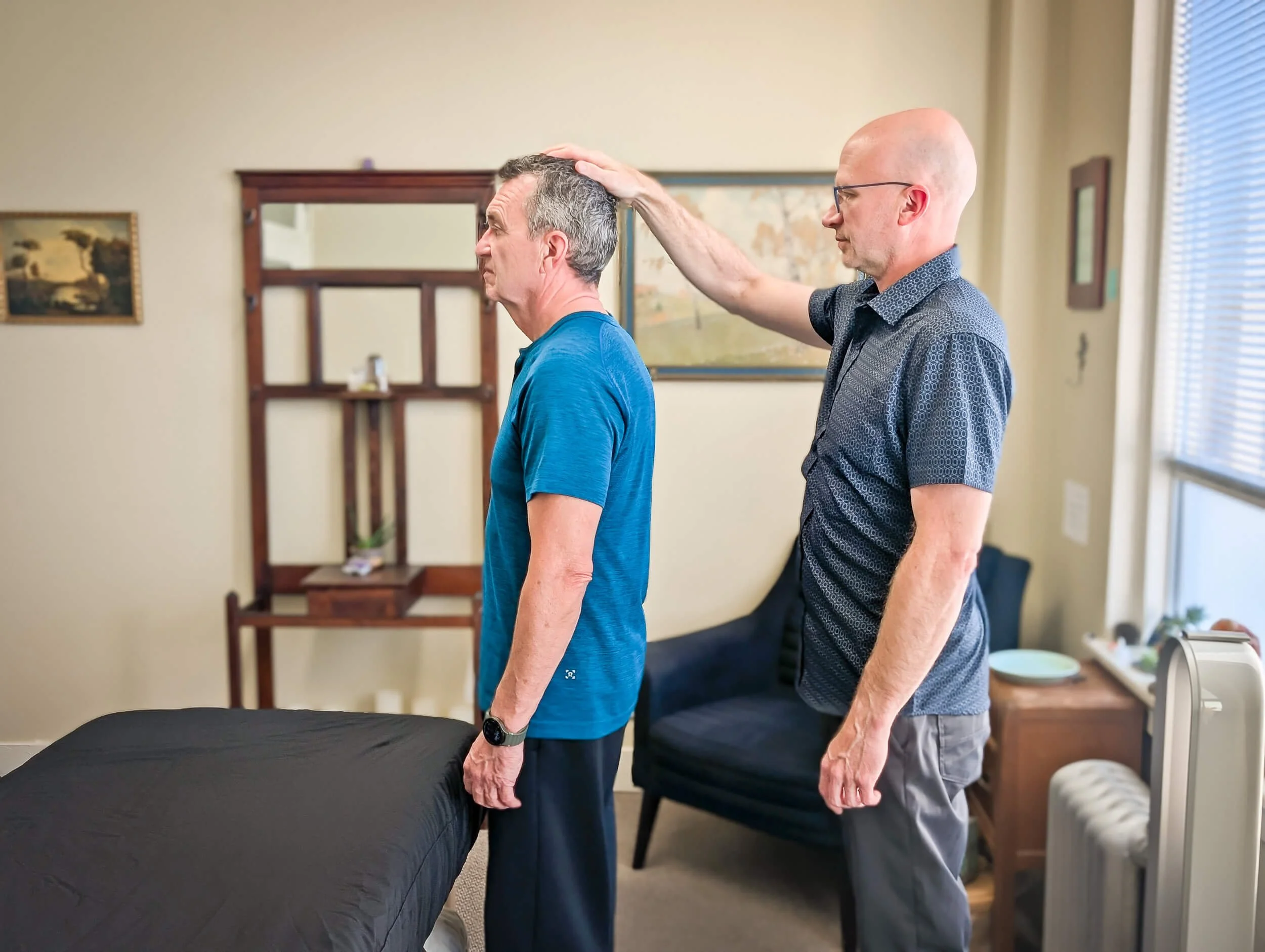
Your session begins with a conversation about your relevant history and what brings you in. From there, I observe your standing posture, sharing what I notice with you so there is a clear baseline to track progress throughout the session. Through gentle hands-on assessment and an attuned awareness of your body's tissues, I begin to identify what is known as the primary restriction.
Everyone carries countless restrictions accumulated over a lifetime. The primary restriction is simply the area your body is most ready to address at that moment—and when released, it provides the most beneficial change for your whole body.
02 · Individualized Hands-On Work
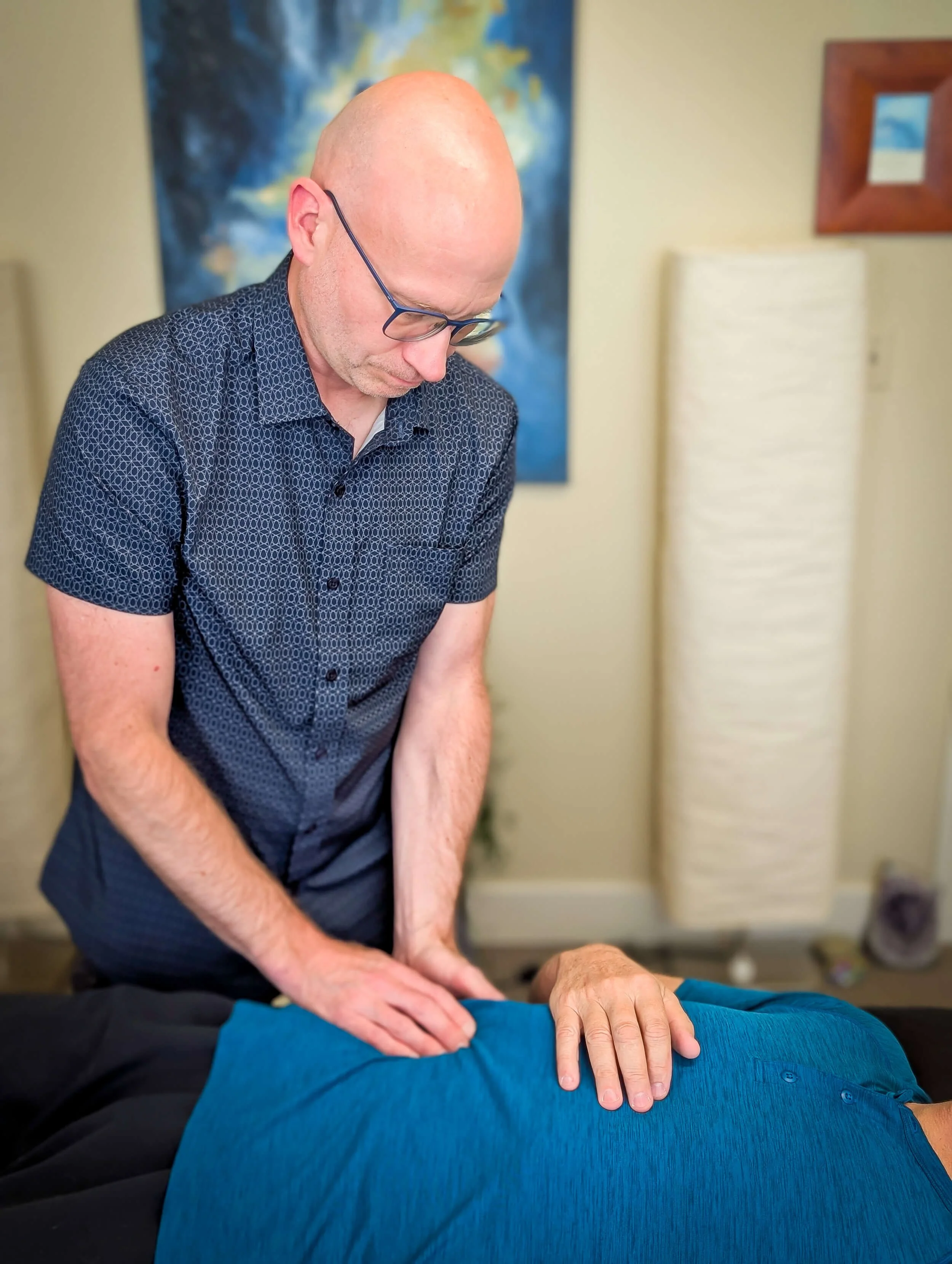
Once a restriction is found, I choose the specific method best suited for that area.
Using calm, focused contact, I feel for the subtle tension or tug the restriction creates and pay close attention to how the tissues respond—noticing when they begin to unwind, soften, and let go. Releasing a restriction can take just a few seconds, while other holds may last several minutes.
03 · Reassess and Follow the Findings
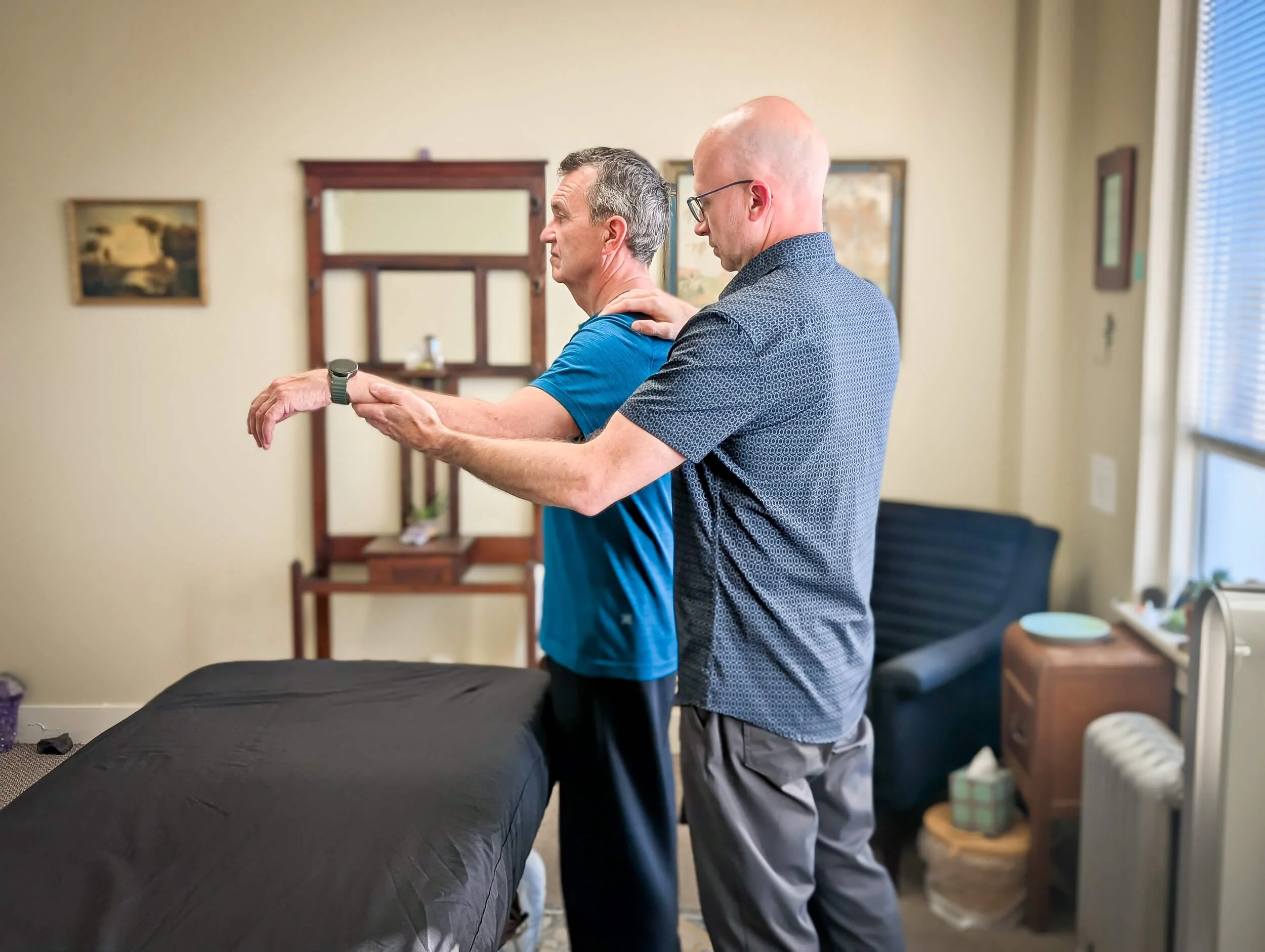
Because a single visit often addresses many restrictions, reassessment happens continuously as the work unfolds. After each release, I recheck how your body has shifted—allowing those changes to reveal what needs attention next.
How this looks varies from person to person. At times, you may stand so I can use specific standing assessment methods to locate the next area of restriction. At other times, those assessment checks happen while you remain on the treatment table. Throughout both, attuned listening and hands-on evaluation work together to guide the session.
Some visits involve standing several times, while others involve very little of it at all—and everything is always adapted to your comfort and what feels easy for your body to do. This continuous cycle of assessing, working, and reassessing guides the entire session.
Work continues until reassessment shows that your body has had enough input for the time being—giving it space to integrate the changes over the next few days and weeks.
A Thoughtful Approach Begins With Listening
Every session starts simply with what you are noticing today. Bring whatever you are experiencing—whether it is a longstanding concern, a stubborn movement limit, or a general sense that something feels off—and your session will unfold from there.